
I’m a musician.
So, naturally, I spend a surprising amount of my life thinking about copyright licensing.
But copyright can be complicated, and sometimes the easiest way to explain what Heart Music Group has spent the past several years trying to change is to forget about music altogether.
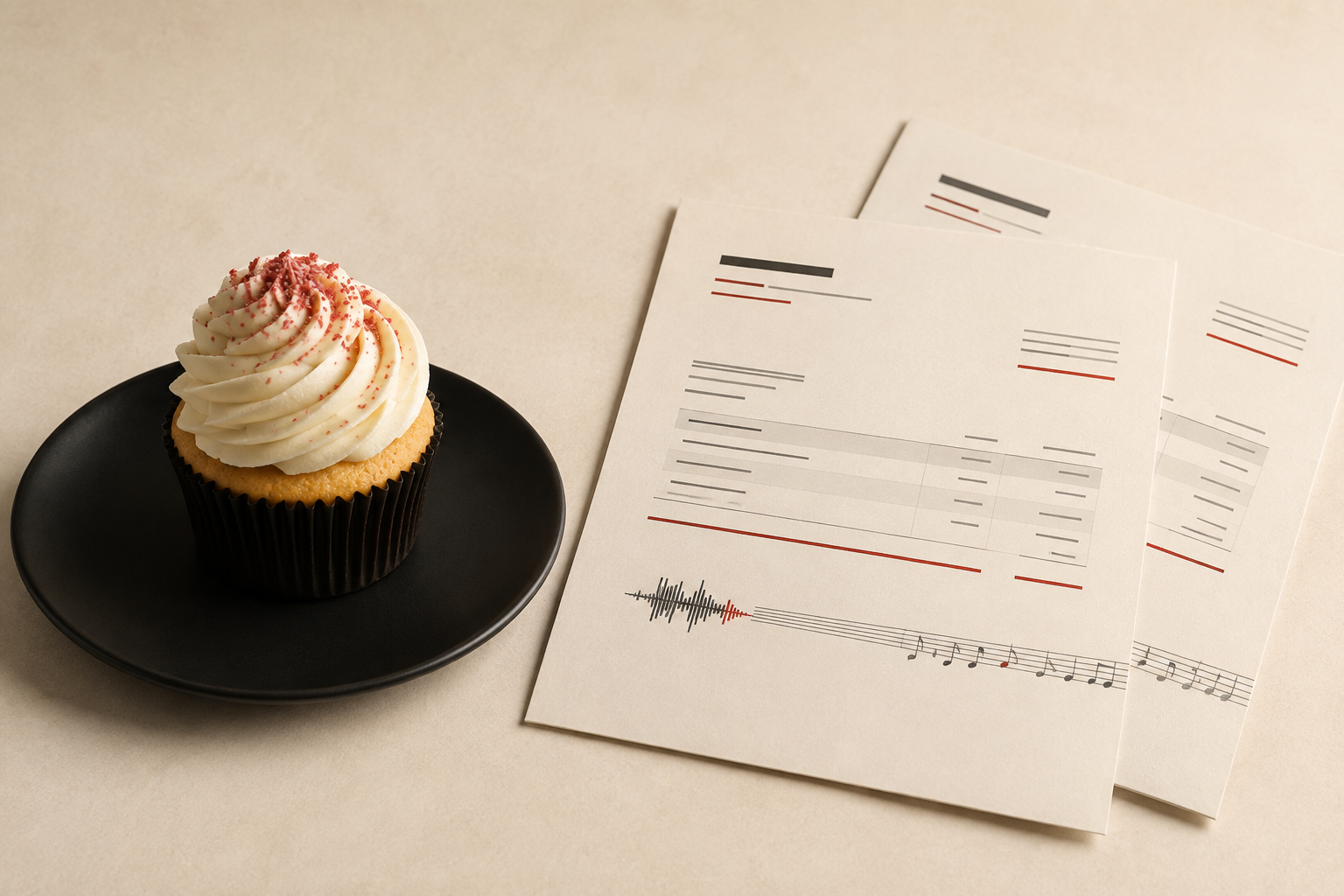
Imagine I own a bakery.
I spend years learning my craft. Eventually, I develop a cupcake that people absolutely love.
It is my recipe. I choose the ingredients. I bake it. People start asking for it.
Then one day, a business walks into my bakery.
“We love your cupcakes,” they tell me. “We'd like to use your cupcakes in all of our stores.”
Fantastic.
There is just one strange problem.
They tell me:
“We've already paid our annual cupcake licence to X.”
I’m confused.
“That’s great,” I say. “But X doesn’t make my cupcake. I do.”
They agree.
They specifically want my cupcake.
But they have already paid X for a licence that covers cupcakes generally.
So if they buy mine as well, they may effectively end up paying twice.
Now imagine this isn't just one customer.
Almost every large customer I approach tells me the same thing.
“We really like what you're making. We'd potentially buy it. But we've already paid X for our cupcake licence.”
Suddenly, having the best cupcake isn't the problem.
Getting paid for it is.
Now make the situation even stranger
Imagine there is theoretically nothing stopping me from selling my cupcakes directly.
The customer is allowed to buy them.
I'm allowed to sell them.
Everyone agrees that I own them.
So technically, there is competition.
Except there is no simple, commercially workable process for the customer's existing cupcake licence to reduce when they start buying cupcakes directly from me.
Think about what that does to the market.
I could create an incredible product.
I could charge less.
I could offer better service.
Customers could actively want to switch some of their purchasing to me.
But if they still have to pay substantially the same amount to X, regardless of how many cupcakes they buy from me, why would most businesses bother?
That is the difference between competition existing in theory and competition working in practice.
And, in simplified terms, this is one of the central problems we have been dealing with in commercial background music.
Except musicians actually do make the cupcakes
Music isn't a generic substance that simply appears.
Someone writes it.
Someone performs it.
Someone records it.
Someone owns the relevant rights.
And yet, when I began trying to establish a direct commercial licensing pathway for independent music through Heart Music Group, we encountered an extraordinary practical problem.
Businesses were already accustomed to obtaining broad music licences through the established collective licensing system.
That makes sense when they are using the repertoire represented by that system.
But what happens when a business deliberately chooses to use music that it has licensed directly from someone else?
That sounds like it should have an obvious answer.
In practice, establishing a workable answer has consumed years of our time.
Imagine the baker having to become a competition-law expert
Now return to our bakery.
The baker just wanted to bake cupcakes.
Instead, because they wanted to sell their cupcakes directly, they suddenly find themselves studying how the national cupcake licensing system works.
They start writing to the incumbent licensing organisations.
They talk to businesses.
They investigate how licence reductions work.
They develop systems to prove exactly which cupcakes were used and when.
They participate in regulatory processes.
They write submissions to competition regulators.
They collect evidence from customers showing how the existing arrangements affect their ability to compete.
Eventually, the baker is spending an extraordinary amount of time trying to establish the market mechanism that allows them to sell the cupcake they already own.
At some point you would reasonably ask:
Why is the baker having to do all of this?
That question has crossed my mind more than once.
I started as a songwriter and musician.
Yet establishing Heart Music Group has required me to become deeply involved in questions of copyright licensing, competition, collective management, repertoire identification, licence adjustments, reporting and regulatory processes in both New Zealand and Australia.
Not because those were the industries I originally wanted to enter.
Because they stood between the creator and the customer.
This is why proportional reductions matter
There is a relatively straightforward principle at the heart of this.
Go back to the cupcakes.
If a business normally buys 100 cupcakes through X, but decides to buy 20 directly from our bakery, it shouldn't have to pay X for 100 cupcakes and pay us for another 20.
There needs to be a workable way of recognising the 20 cupcakes it has sourced elsewhere.
Music is obviously legally and commercially more complicated than cupcakes.
There are multiple rights involved, enormous catalogues of repertoire and legitimate administrative challenges.
But the competitive principle is not particularly complicated.
If a business directly licenses part of the music it uses, there needs to be a practical way for that choice to be recognised.
Otherwise an alternative supplier can theoretically enter the market while remaining commercially unable to compete.
So we started building the missing pathway
That has become a major part of Heart Music Group's work.
We haven't simply built a catalogue of independent music.
We have had to work on the infrastructure around it.
How does a business know which music it has directly licensed?
How do we demonstrate what was played?
How do we distinguish our repertoire from other repertoire?
How should the business's licensing arrangements respond?
How do we make this simple enough that a retailer doesn't need its own copyright lawyer just to play music?
These are the problems we have been working through.
Alongside that commercial work, we have participated extensively in regulatory processes, including the ACCC's consideration of APRA AMCOS's authorisation arrangements in Australia and engagement with the New Zealand Commerce Commission.
We have provided evidence based on something particularly valuable in competition discussions:
we have actually tried to compete.
Being first is expensive
There is something else I hadn't appreciated when we began.
The first entrant into a market often has to pay for problems that every future entrant benefits from having solved.
If, eventually, it becomes completely normal for a New Zealand business to say:
“We directly license 20% of our background music from this provider, so our other licensing arrangements recognise that,”
the next company entering this market may simply build its product and compete.
I genuinely hope they can.
But that has not been our experience.
We have spent years working through the questions that come before that point.
- Hundreds of emails.
- Submissions.
- Meetings.
- Regulatory engagement.
- Prospective customers.
- Systems development.
- Repertoire administration.
- Legal analysis.
- And plenty of commercial opportunities that became substantially more difficult because the competitive pathway itself was still being established.
That is the hidden cost of trying to be first.
I don't want to own the cupcake market
There is an important point here.
Heart Music Group's objective isn't to replace one dominant licensing system with another.
If someone else wants to start another bakery, they should be able to.
Make a better cupcake.
Charge less.
Pay creators differently.
Develop a different licensing model.
Compete with us.
That is healthy.
Collective licensing will continue to have an important place in the music industry too. It solves genuine problems and provides businesses with access to enormous amounts of repertoire.
The issue is choice.
A market becomes genuinely competitive when the customer can say:
“I want that cupcake.”
And the person who made it can simply say:
“Great. I'll sell it to you.”
Without first having to spend years helping build the market that allows the transaction to happen.
That is, in many ways, what the past several years at Heart Music Group have been about.
I started out wanting to make sure independent musicians could be paid when businesses used their music.
Somehow, that turned into helping establish a practical pathway for competition in commercial music licensing.
It has been considerably harder than baking cupcakes.
But hopefully, one day, buying music directly from the people who make it will seem just as ordinary.