Fair Play Aotearoa did not begin as a technology project.
It began with years of writing and releasing music while trying to understand how an artist could achieve recognition and still struggle to make ends meet.
I have been involved in music since I was 18. A few grey hairs later, I still feel as though we are only just getting started.
Through my project, The Heart of Katherine, I have heard my songs being played, seen them enter the New Zealand charts and watched music that began as an idea reach people I had never met.
Those moments meant everything to me as a songwriter. But they were accompanied by a difficult reality.
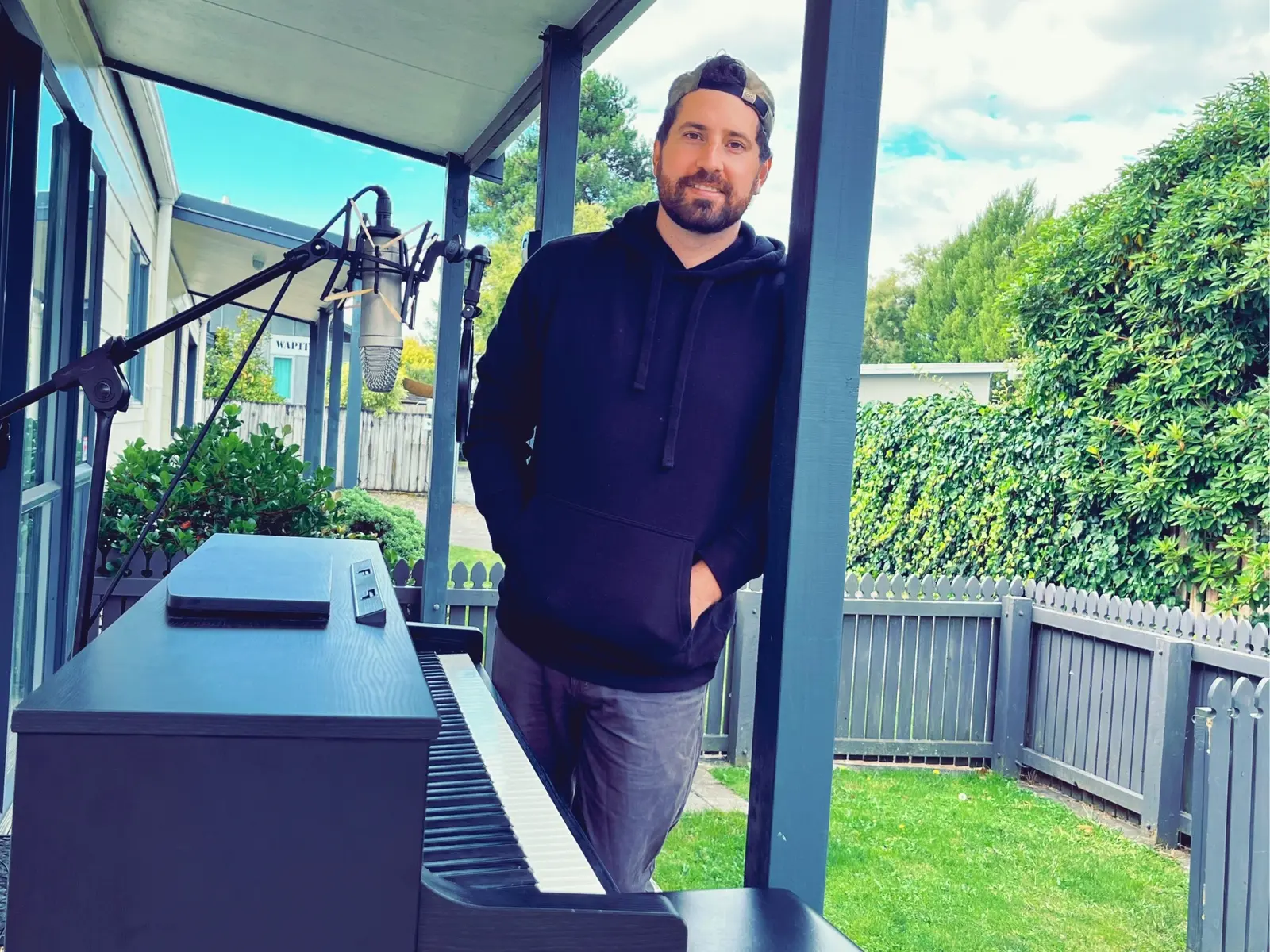
Even while my music was being played and charting, I was barely making ends meet. There was a painful disconnect between the apparent success of the music and the financial reality of being the person who created it.
I saw the same thing happening to my peers. Exceptional New Zealand musicians were writing, recording and releasing nationally recognised music while struggling to build sustainable careers.
At the same time, I would see rugby teams running onto stadium fields with enormous public and commercial support behind them. Then I would see remarkable musicians playing in small bars for modest audiences and very little financial return.
I remember wondering why we rally so strongly behind our sportspeople, but not always behind our musicians in the same way.
New Zealand is rightly proud of its sporting culture. I believe we should be equally proud of the people creating our music.
We do not have a talent problem
For too long, overseas music has been treated as though it sits on another level. International artists dominate our commercial playlists, public spaces and cultural attention, while extraordinary New Zealand music can struggle to receive the same visibility at home.
My honest view is that New Zealand artists are not second best. They are every bit as good as the biggest international acts, and in many cases I believe they are better.
We have already seen New Zealand artists break through internationally. That success proves the talent has always been here.
“We do not have a talent problem. We have an infrastructure problem.”
Following the royalty pathway
As both a songwriter and a lawyer, I began trying to understand why creators could remain so disconnected from the value generated by their work.
Businesses throughout New Zealand pay significant amounts to use music. Yet artists can have very little visibility over where their work is being played or how the licensing fees associated with that use reach them.
OneMusic provides businesses with a convenient blanket licence covering the repertoire represented by APRA AMCOS and Recorded Music NZ. That has an important place in the market, but from my perspective as a songwriter, it did not answer every question.
I could not easily see a direct connection between a particular business playing one of my songs and a royalty reaching me because of that specific use. Businesses also had limited practical information about licensing part of their music directly and adjusting the corresponding portion of their blanket licence.
Direct licensing was possible in principle, but the practical pathway was difficult to use.
I did not want to remove OneMusic from the picture. I wanted artists and businesses to have a genuine alternative that could operate alongside it, with greater choice, clearer playback information and a more direct royalty pathway.
I kept returning to one question:
When a business pays to use music, how can we create a clearer connection between that payment and the artists whose work is actually being played?
Why we built Fair Play Aotearoa
If artists and rights holders could authorise Heart Music Group to represent their music, businesses could choose to use that repertoire and direct more of their licensing spend toward the creators they were actually playing.
The idea was simple. Making it practical was not.
Businesses needed reliable music supply, appropriate playlists, workable licensing arrangements and evidence of what had been played. Artists needed proper representation, rights verification, accurate reporting and confidence that royalties could be connected to actual use.
That is why we built Fair Play Aotearoa.
We did not set out to build another music player. There were already plenty of ways to make music come out of a speaker. What was missing was a system connecting music playback with licensing, reporting and artist royalties.
Fair Play Aotearoa records what was played, when and where it was played, and the licensing category associated with each track.
For businesses, this provides visibility over the proportion of their music licensed directly through HMG. It can also provide evidence supporting an adjustment to their OneMusic licence fee, subject to OneMusic’s applicable requirements and processes.
For HMG’s directly represented repertoire, the same information helps us understand whose music was used and allocate direct licence royalties accordingly.
The platform also integrates with dedicated in-store media players that HMG can manage remotely. This creates a practical, “turn it on and leave it” solution for businesses while the reporting happens in the background.
I could not have done this alone
This journey has involved years of legal work, artist onboarding, commercial discussions, regulatory submissions, software development and hardware testing.
Although I have carried much of the day-to-day work, I could not have done it alone.
My wife, Kayli, and my family have supported me relentlessly. They have lived through the long hours, setbacks, financial uncertainty and countless conversations about what this could become.
They continued believing in me when progress was difficult to see and when walking away may have appeared to be the more sensible option.
Their patience, sacrifice and encouragement have made this work possible. Whatever Fair Play Aotearoa becomes, their support will always be part of its foundation.
I am also deeply grateful to the artists who have trusted HMG with their music, the businesses willing to consider a different approach, and everyone who has helped us move forward.
We are only getting started
After more than two decades in music, I have seen how much talent exists in New Zealand and how difficult it can be for that talent to build a sustainable pathway.
I have also seen enough to believe we can change this.
This is about more than royalty payments. It is about helping New Zealand get behind New Zealand music. It is about hearing more local artists in our shops, public spaces and workplaces, and treating musicians as an important part of our culture and economy.
For me, success will not be measured only by the number of businesses using Fair Play Aotearoa or the number of songs played through it. It will be measured by what that creates for the people behind the music.
Every time HMG helps a creator spend less time at their day job and more time creating, that is a win. Every time an artist moves closer to supporting themselves through their music, that is a win. For every creator we can eventually help leave their day job and build a sustainable career from their work, that will be an extraordinary win for HMG and for New Zealand music.
We have the talent. We have the music. What we need is the infrastructure and the collective belief to put our artists where they belong.
I am committed to helping build it.
“More than anything, I just want to see New Zealand artists win.”